
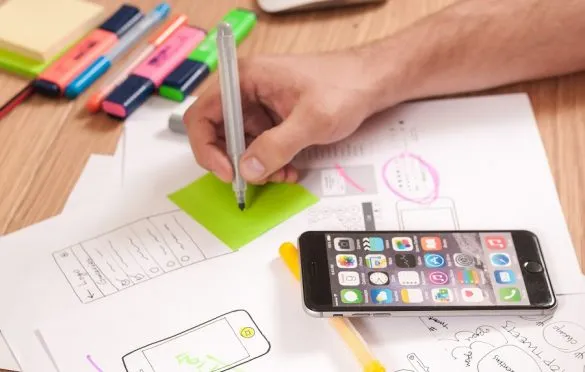
The importance of design processes with Flox Dairo, UI/UX Designer at OneFico
A few weeks back, we had another Tweetchat session with our twitter community and Flox Dairo was our Tweetchat guest for that week. Florence Dairo, also known as FloxDairo is a UI/UX Designer at OneFico, owner of Carbon (formerly Paylater). It was an opportunity for tech founders, tech enthusiasts, developers, and designers in our community to gain in-depth insights on the importance of Design Processes.
FloxDairo began by appreciating Ingressive for the opportunity. “We’ll basically be chatting about The Importance of Design Processes,” Florence began.
When it comes to design, the strength lies heavily on the steps taken to create the final result than the final product, itself. Please bear in mind that there are more than one possible solution or thoughtful approach to solving your clients’ problem…(so feel free to come up with your process 😉). The attempt at solving the given design problem demonstrates how empathic the designer is willing to be on behalf of the client.
That said, a design process is a series of steps that helps you (as a designer) define, plan and produce a product your building. Product, in this case, are applications (mobile and web apps).
Having a design process allows you to be efficient and focused on creating the best product possible. It also allows you to design based on facts and not assumptions. There are different ways of approaching new projects and it is advisable to create a process that works for you. Most importantly, it is advisable to have a process that is strong and flexible enough to accommodate different clients and problems.
I start by “Exploring” the problem, analysing and expanding my knowledge through UX research (collecting as much relevant information as possible at the early stage int the project’s lifecycle through user surveys and user interviews <for primary data>)
This gives me an idea of my users, their needs and visions. Then (no.2) “Focus”. I combine my findings and facilitate scoping exercises such as personas, user stories, and product maps. This allows me to decide how my users will move through the app.
Then I move on to creating “Wireframes” (LowFidelity and MidFidelity). In order to ensure that you are designing the best possible experience for your users. It is advisable to create bare bones of the app (no colours, no photos or icons just boxes and lines) to show the placement of where things would be without getting distracted by how things look. Then to HighFidelity “Visual design” and Interaction design (ie. animations and transitions). At this stage, you can use fonts, add colours, images, and icons. You can basically give your app an identity that brings it to life.
The last stage of my process will be “Usability analysis” and “Production design”. Create and test prototypes. Along all stages of your process, it is advisable to always test your design decisions made.
Then finally create style guide and asset slicing. This allows you to accurately ship your designs to your engineering team for production.
Why are all these important?

- Primarily to cater for your users. UX research gives you more information about your clients’ users and their competitors.
- With a clear design process, you can establish realistic project deliverables and deadlines with stakeholders of the project. They know what to expect and when thereby eliminating needless miscommunication.
- It decreases the risk of failure. There’s a lower risk of having a failed product after carefully and thoroughly gathering your findings to create the product as opposed to pushing pixels first.
- It allows you to be more efficient and transparent when designing. Efficient in the sense that you know the next step to take (and you’re not just chasing your tail) and you can clearly trace back your steps. Transparent, in the sense that all (major) stakeholders on different teams are involved and can collaborate easily at any time. There are a lot of amazing tools that encourage collaboration.
When it comes to design, @figmadesign is recommended to bring in major stakeholder who’d give inputs at every stage of your design. This saves time and effort.
To conclude the tweet chat on the importance of design processes, Florence explains that there is no one way (or process) to get through a project.
It is advisable to come up with a strong and flexible design process which clearly shows what you need and caters for different clients’ problems.
Be a part of our biweekly tweet chats by following us on twitter and also join the Ingressive community to get access to Founders, developers, and designers in the ecosystem!